Our Sales staff tells me that the deadline for the special promotion for the May issue of Parking Today is this coming Friday. Advertisers should not miss out on this issue which will include articles on “The Parking Ecosystem,” “The Green Parking Council,” “Six steps to setting up an on street parking program,” “Why State and Regional Associations Reach More people than the National Organization,” and much more.
If you are exhibiting at the IPI and haven’t spoken to either Carol or Marcy, contact them today. carol@parkingtoday.com – marcy@parkingtoday.com.
JVH
According to city officials in Providence, Rhode Island, there were 442,894 parking tickets at least a month past due in their city as of March 26. Including the original fee and late fines, this could add up to $6.6 million.
I’m shocked by the total and by the total lack of enforcement. With numbers like that, how can you blame the low-lifes who don’t pay their fines? It’s obvious the city can’t enforce its parking laws and at least half a million people know nobody’s really going to make them comply to parking regulations.
If you’re going to make a law, you have to enforce it or it becomes a joke.
Read the article here.
It’s good to read about a city that has turned around a shoddy parking program. A few years ago, Lexington, Kentucky officials reorganized parking and its enforcement in their downtown area and the results have been remarkably successful. Parking is easier for everyone, enforcement is consistent and funds generated from tickets and meters are being used to upgrade parking infrastructure.
Read more here.
The jobs of managing public parking, writing and collecting fines and planning for better, more efficient parking were consolidated in 2008 under the Lexington Parking Authority. Finally, parking was someone’s priority.
Since then the number of tickets written has doubled and collections have risen from about half to around 80 percent.
But the goal isn’t just to harrass parkers and collect more money, it’s to make more parking available, and that’s happened, too.
Rather than throw in the towel, the city tried a saner approach and can now enjoy the rewards. Way to go, Lexington.
The Curse of the Bambino is a legend revolving around the Boston Red Sox. Seems that after the Sox sold Babe “Bambino” Ruth to the New York Yankees in 1920, they were unable to win a world series again until 2004. However they did beat their rivals to in that year to go on and take the Cardinals 4 games to zip. “Reverse the Curse” was the cry in Beantown in 2004, and they did.
Its now 2013 and the Sox are at it again, beating the Yankees at Yankee Stadium 8-2 on opening day. The Yankees had another problem yesterday. The company that built and owns the parking garages surrounding their new ball park missed its bond payment of a tad over $6 million. You can read all about it here.
Bronx Parking, the company set up to supply parking for the Yankees issued $237.6 million in bonds in 2007 and has been struggling ever since. Projections have shown that the garages have to fill at every home game to break even and they don’t come close. Excellent bus service, the fact that the subway and light rail runs adjacent to the Stadium, and a $35 per game parking charge, makes driving by car a poor choice for Yankee fans.
The most recent solution to the problem was to raise the parking rates, which simply drove those who wanted to take their cars to the game to nearby garages up the Grand Concourse that had plenty of free space in in the evenings and on weekends.
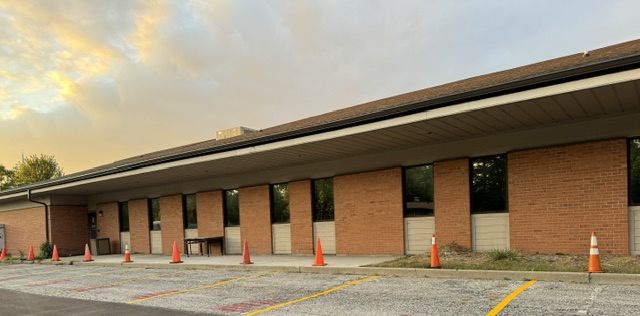
I was in one of the garages last fall and took this shot:

I’m sure there are more cars than this during a game, but however many there are, its not enough. (Note that there isn’t’ a lot of oil on the floor.) There has been much criticism of the feasibility studies that were done, as the existing garages (down the street) and the transportation systems have been in place for years.
The Yankees aren’t on the hook for the bonds, but the good citizens of the City of New York are and before this is over, they may have their own curse to worry about, and it won’t be involving the home of the Bronx Bombers, but some white elephant parking structures built nearby.
JVH
I’m in 100% agreement. One of the city council members has a plan to ‘save’ the city’s budget by, gasp, cutting expenses, and a few accounting tricks. Wouldn’t it be reasonable to take that tact first, rather than selling (leasing) off the city’s parking meters?
Of course this way council members don’t have to take a political risk. Cutting the budget always gore’s someone’s ox and some constituency will be upset. Alternatively finding other sources of funding is always popular.
Maybe the Citizen’s of home of the Reds and the Bengals have something here. Put a stop to spending increases until the budget is under control.
JVH

A fellow in Omaha got a ticket for parking there on Saturday (He’s not handicapped) and a judge threw it out. Here’s the deal — It’s always a handicapped parking space, but between 8:30 AM and 5PM M-F there is a three hour limit. At other times there is no limit.
But unfortunately that is not what it says. The city says it has changed the signs a number of times in the past few years but has never been able to come up with a solution. They are going to try two signs next. I’m sure that will solve the problem.
How about trying this:
This is always a Disabled Parking Spot
Between 8:30 AM and 5 PM M-F
They can park for 3 hours only.
All other time, the Disabled
can park as long as they like.
JVH
So if someone held a gun to my head and said “spell Cincinnati, or die,” then I’d be dead. You can’t always rely on spell check, but it saved me today, and I can finish this post.
Some other good news related to Cincinnati is that its honorable Judge Robert Winkler has delayed the leasing out of the city’s parking garages, lots and meters pending a vote from its residents. It’s a $92 million parking plan, and the city needs the money yesterday, however, it seems correct to have the locals decide. Maybe they will vote “yes,” maybe they will vote “no,” but they ought to have a say in the situation. I like to see a government official acknowledge the value of the vote.
Read the rest of the article here.
Cincinnati’s city council was trying to push the plan through using an “emergency” exemption and says more than 300 firefighters and police officers will have to be laid off if the parking plan is not carried out.
It’s typical of a government entities to threaten the services we see as most critical in order to get their way. Too bad the people can’t vote on which government employees will get the axe – I bet few would miss the city council.
Michael has send in a piece on “What the Steamship and the Land line can tell us about the Decline of the Private Car.” You can read it here. Basically it says that all technology has a shelf life and just as the buggy whip, the sailboat, and the telephone land line, private cars will slowly fade away.
Let’s take a look at the article’s examples. The steamship replaced the sail boat because technology gave us something that would cross the seas faster and safer. However we didn’t stop crossing the seas, in fact I’m certain that the gross tonnage of freight carried by steamship has far outreached that carried by sail. Boats are still there, they provide the same service, but they do it with a different technology.
The telephone land line is similar. Cell phones replace a landline but they don’t replace people communicating with one another. We could say that landlines replace telegraph lines, or for that matter, smoke signals or the Pony Express. It didn’t replace communications, just the way we do it.
The difference between private cars and say mass transportation is related to freedom of choice. The car means that I can go anywhere I want any time I want. I’m not restricted by train schedules, bus schedules, or the like.
Much of the freedom we enjoy is related to the use of private vehicles. How I purchase food, where I work, when I work, what entertainment I enjoy, where I can spend time in recreation, are all related to the private vehicle. How much time I can spend arguing over a particular topic is directly related to whether I have to catch the last bus or train, or whether I can simply drive home when the discussion is completed.
The economics of my life is related to my ability to go shopping in big box stores and get the benefits of scale. I can pop down to the supermarket, maybe five miles away, and save on my purchases. A can of tuna fish costs a lot less at Ralph’s than at a 7-11.
So unless we see a paradigm shift in how society lives its life — which many social scientists are attempting as we speak – the need for private transportation will continue and the need for individuals to have places to park it.
That’s not to say that the private car won’t change. Compare a Model T to a Toyota Camry and you can see a huge difference. However the actual use of the vehicle has changed little.
Which begs the question, is the freedom that private vehicles give us a good thing. You will note that most people who want to do away with them live in urban centers. So they can easily walk to the market, the concert, or the ball game. Public transportation is ubiquitous and cheap.
However if I live 50 miles out of town and want to go to a concert, ball game, or even the supermarket, what now?
Will the private vehicle change — yep — it will become self driving, it will become less polluting, it will become more comfortable and safer. It may even fly. But just as the steamship and the cell phone, I’ll just bet that the reason for its existence will survive the technology shift.
JVH
The Parking Industry Exhibition 2014 will return to its home at the Hyatt Regency O’Hare adjacent to Chicago’s International Airport and across the street from the Stephens Convention Center which housed the event this year.

Although the event was a great success we decided to move back for a number of reasons.
1. PIE 2012 seemed crowded at the Hyatt because we didn’t have access to the hotel’s grand ballroom. IN 2014 and for the next two, we have reserved 21000 square feet of carpeted 23 foot ceiling floor space for PIE. So we will have the same amount of space in the same shape as 2013.
2. With all events in the hotel, it will be much easier for attendees to network. Seminars will be a short escalator ride away, restaurants and bars are inside the building, and there will be no need to walk ten minutes to get from seminars, exhibits, and your hotel room.
3. The hotel has many different sizes of meeting, seminar, and lecture halls that more closely meet the needs of PIE’s educational component.
4. The grand ballroom is located adjacent to the loading docks so vendor personnel can easily bring their exhibit equipment into the hall. For those with hand carry ‘drop off’ its less than 75 feet from the curb to the exhibit hall entrance.
4. The entire exhibit hall is carpeted so there will be no expense for exhibitors for carpeting (not a small amount).
5. The foyer area outside the exhibit hall is conducive to receptions and networking events.
The goal of PIE is to put people who want information about parking together with people who have that information. By having all activity in the same building with the hotel rooms, it means that more time is available to everyone for that informal and formal networking activity.
See you at the Hyatt March 16-19, 2014.
JVH
I know I’ve been remiss in getting information about the 2013 edition of the Parking Industry Exhibition out to you but there you go. I felt that my quotes might be a little too self serving, so I waited until we got some reaction from exhibitors and attendees.
More than 900 parking professionals turned up at the Stephens convention center in Chicago two weeks ago. Over 600 were attendees and 300 exhibitor personnel. They attended more than 40 seminars, addresses, receptions, and exhibit activities over the three days.
Here are some of the comments we have received:
“PIE was executed flawlessly with each audience in mind. As an exhibitor, we appreciated the attention spent ensuring that vendors and clients had ample time to interact and knowledge share — Also Mixers were a blast.”

“Quality attendees. Quality booth space, Quality Staff. We love PIE!”
I was pleased with the quality of the educations sessions and especially how they were scheduled so as not to coincide with exhibit hours.”
“Very good international traffic”

PIE 2013 provided us with an excellent opportunity to develop relationships with parking professionals and stay abreast of the latest parking industry trends. ”
The relationships that are good for our business are always solidified here at the PIE show.”
“PIE has the intimacy of a regional show but the traffic of a national show.”

“PIE show brought in great, high quality professionals. The show was very well organized with great content in the general sessions, with both relevant topics and knowledgeable speakers. The venue was great fit for the show. ”
“Boot camp was a great orientation of all the nuances of the parking industry. Meeting several ‘competitors’ was actually very beneficial for advancing our enterprise.
“This was our first year at the PIE show. We were very pleased with the amount of contacts we were able to make. We very much look forward to attending more PIE shows in the future.”
“PIE gives us a unique chance to learn more about our customer’s concerns with substantive learning session and many opportunities to talk with parking managers in an open and relaxed environment, ”

“The PIE show managed to provide an effective way to learn more about parking and what’s happening in the industry. Its a great place to dig deeper into the needs of parking managers.
“The location is the key. The other shows are coastal, PIE is easily accessible. There are more opportunities to meet people from all over the country.:
There you have it. Couldn’t have said it better myself.
See you in Chicago on St. Paddy’s Day next year. Why would you want to be anywhere else?
JVH
|